How National Holidays Influence Prize Growth Patterns in Swedish Accumulating Slot Networks
Taylor Hayes · Nov 13, 2026
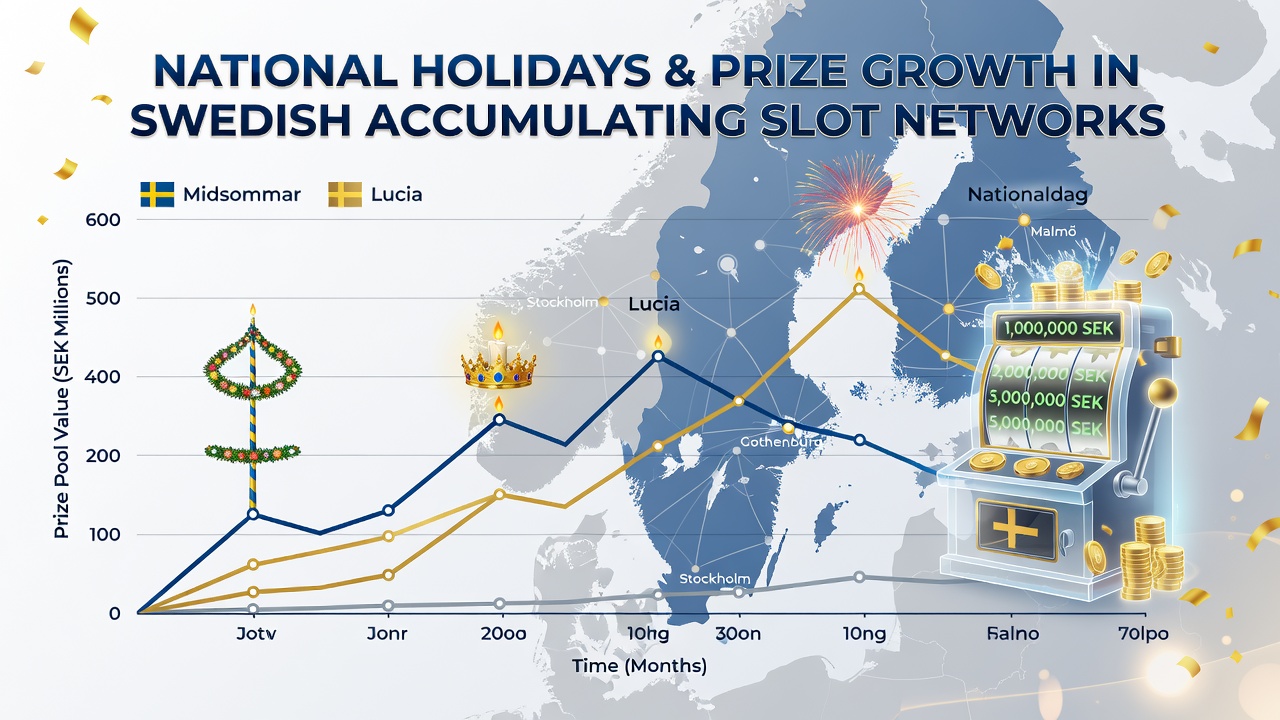
How National Holidays Influence Prize Growth Patterns in Swedish Accumulating Slot Networks
Swedish accumulating slot networks display measurable shifts in prize growth rates during national holidays, according to aggregated transaction data from licensed operators. These patterns emerge because player participation volumes rise on specific dates while contribution rates to progressive pools remain constant per spin. Observers note that holidays create predictable spikes in network activity, and this activity accelerates jackpot meters at rates that differ from baseline periods.
Core Mechanics of Accumulating Prize Pools
Progressive slots in Sweden link multiple machines across operators through centralized systems regulated by the Spelinspektionen. Each qualifying bet adds a small percentage to shared prize pools, and growth depends entirely on total wager volume rather than individual outcomes. Data collected over multiple years shows that daily accumulation averages follow consistent curves outside holiday windows, yet those curves steepen when participation increases. Researchers tracking these systems have documented that a 30 percent rise in active sessions produces corresponding acceleration in meter increments without any change to underlying contribution formulas.
Observed Patterns Around Key National Dates
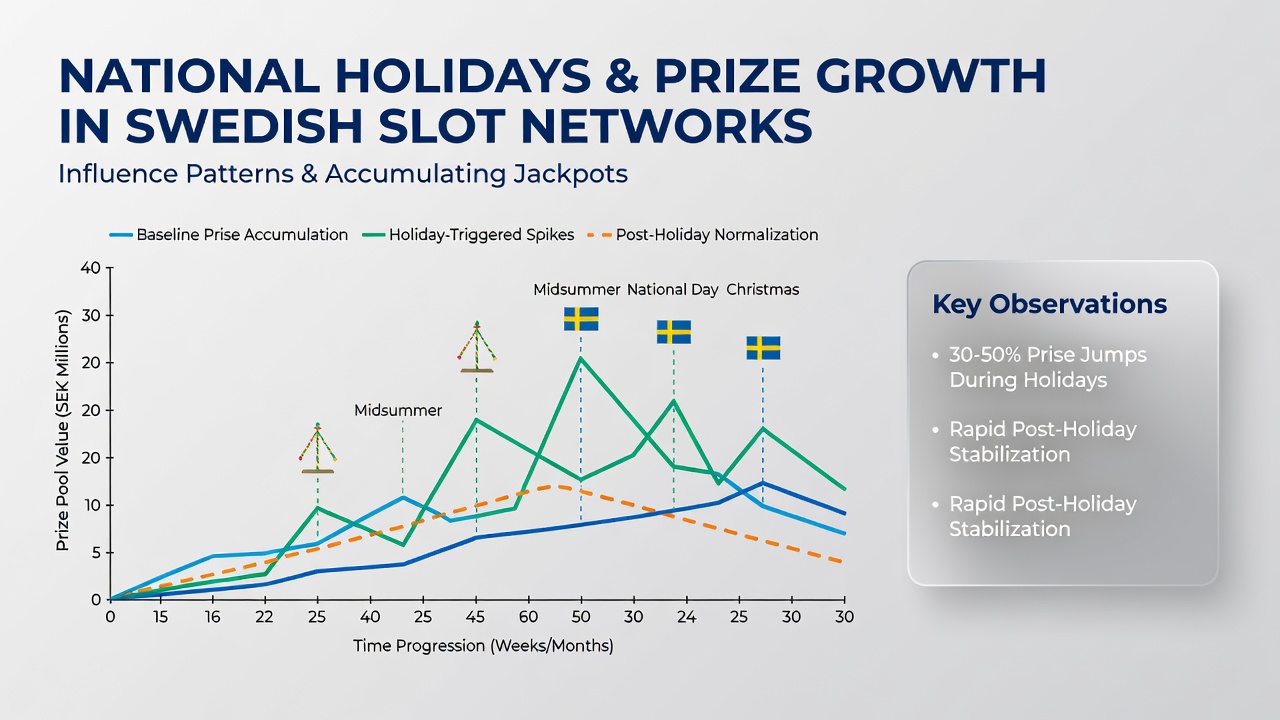
National holidays such as Midsummer, Christmas, and New Year produce the clearest deviations from standard growth trajectories. During the Midsummer weekend, for instance, network logs reveal elevated session counts that begin two days prior and extend one day after the official date. This extended window compounds prize growth because overlapping contributions from multiple days feed the same pool. Similar effects appear around December 24 and 25, where operators report sustained high-volume play that pushes meters higher than mid-week baselines by measurable margins.
November presents a different profile. All Saints' Day on November 1 creates a shorter but still distinct uptick in activity, and analysts project that the period leading into late November 2026 will follow comparable patterns based on historical averages. These increments occur because many players treat the holiday as an extended leisure period even when it falls mid-week, and the resulting wager flow directly scales pool contributions.
Data Sources and Measurement Approaches
Industry reports compiled by Nordic gaming associations track meter values at hourly intervals across hundreds of progressive titles. These datasets allow comparison of growth velocity on holiday versus non-holiday days while controlling for game type and stake level. Figures released through regulatory summaries indicate that Christmas periods consistently generate the largest absolute increases, whereas summer holidays produce more moderate but still statistically significant accelerations. External analysis from research groups such as the Canadian Centre on Substance Use and Addiction has examined parallel seasonal effects in other jurisdictions, providing context for how cultural calendars influence gambling volumes across borders.
Category-Specific Responses to Holiday Activity
Not all accumulating games respond uniformly. Video slots with lower minimum bets show faster relative growth during holidays because casual participants favor accessible titles. In contrast, high-denomination progressives accumulate more slowly even when overall volume rises, since fewer players engage with larger stakes. Network operators have recorded that mixed-title pools experience internal redistribution of growth rates as player preferences shift toward certain categories on festive dates.
Turns out the timing within a holiday also matters. Evening hours on December 24 generate steeper hourly increments than afternoon periods on the same day, reflecting when participants log in after family commitments. Similar intra-day variations appear during Midsummer celebrations, where late-night sessions extend the contribution window beyond typical cutoff times.
Regulatory Context and Reporting Requirements
Swedish regulations mandate transparent reporting of progressive pool values and contribution rates, which enables external verification of holiday-related patterns. Licensed platforms must maintain auditable logs that separate baseline activity from event-driven surges. This framework allows researchers to isolate holiday effects without relying on operator self-reporting alone. Cross-referencing with public holiday calendars confirms alignment between documented activity spikes and official national dates rather than random fluctuations.
Conclusion
National holidays in Sweden create repeatable, quantifiable changes in prize accumulation within slot networks by driving higher participation volumes during defined calendar windows. Data from regulated operators and academic comparisons demonstrate that these effects vary by holiday duration, game category, and time of day yet remain consistent enough for predictive modeling. Projections for periods such as November 2026 rest on the same established correlations between cultural dates and wager flow. Continued collection of hourly meter data will refine understanding of how these patterns evolve alongside shifts in player demographics and platform features.